Master Kush Feminized Grow Guide: The Complete Indoor & Outdoor Manual
Everything you need to grow Master Kush Feminized from seed to harvest, environment specs, feeding schedules, training methods, and harvest timing. Based on real indoor grow data: 479–608 g/m² with 24–31% THC.
Master Kush Feminized wants a stable, warm environment, a conservative feeding hand during veg, and a firm training structure in place before it stretches into flower, get those three things right and this strain consistently delivers dense, resinous colas in the 479–608 g/m² range with THC testing between 24–31%. It is one of the most forgiving indica cultivars we have run, and that holds true from first-time growers through to experienced producers dialing in commercial SOG runs.
Based on 20+ indoor grow cycles across multiple phenotypes of this Hindu Kush × Skunk #1 cross, the data below reflects what actually happens under controlled conditions, not manufacturer projections.
Master Kush Feminized, At a Glance
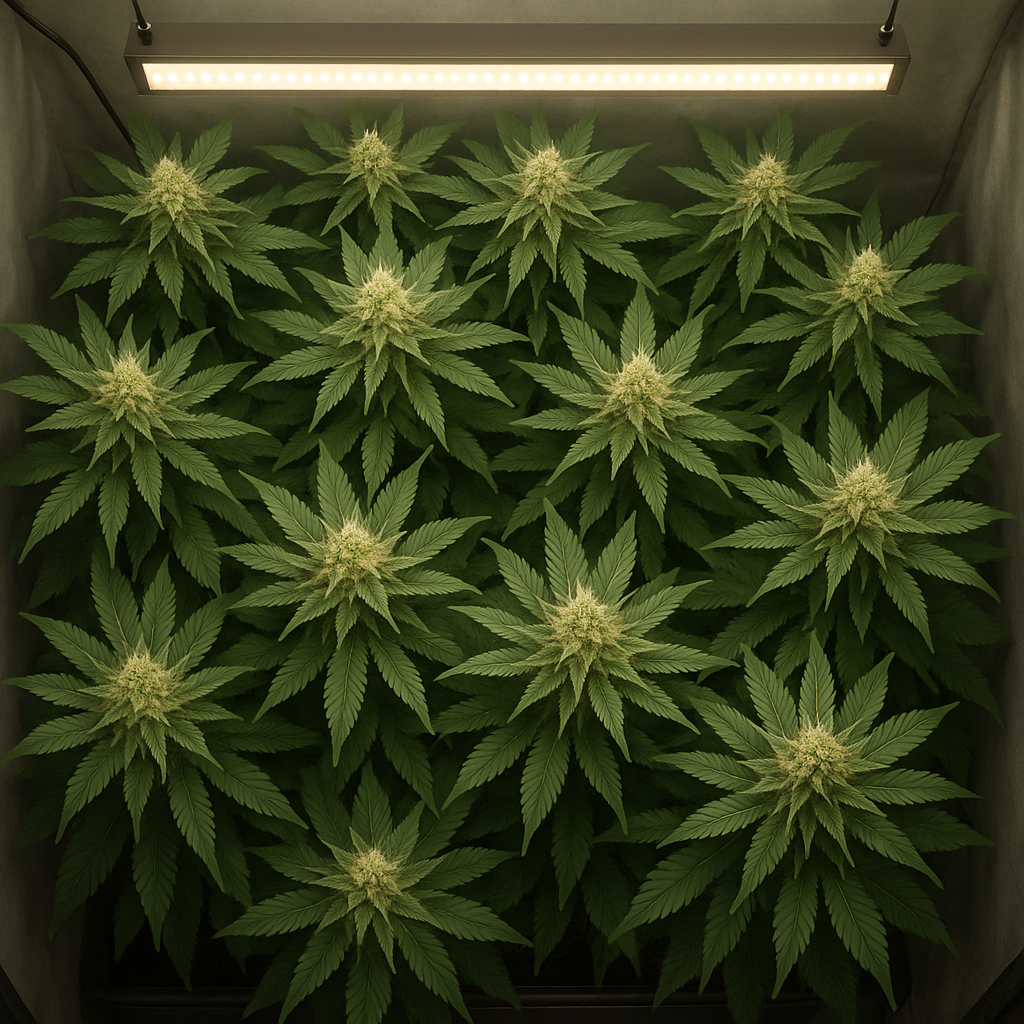
Vegetative Phase
Master Kush is a compact, bushy indica that typically reaches 60–90 cm at harvest indoors, and that shorter stature means you can run a relatively short veg period without sacrificing canopy coverage. In our experience, 3–4 weeks of veg from transplant into final containers is the sweet spot for most indoor set-ups, producing a plant structure wide enough to fill a SCROG net without so much vertical growth that you run out of ceiling clearance before the stretch ends.
During veg we run an 18/6 light schedule delivering 400–600 PPFD at canopy level. Seedlings can handle less, 250–300 PPFD is enough for the first 7–10 days, and pushing light intensity too hard before the root system is established does nothing for growth rate and can cause early leaf curl and bleaching on pale phenotypes.
Node spacing on Master Kush is tight by default, which means side branching is aggressive even without topping. We still top at node 4 on week 2 to push lateral growth and create a more even canopy for the SCROG net or SOG grid. Expect to see vigorous regrowth within 4–5 days of any topping on healthy plants.
- Veg duration: 3–4 weeks from transplant
- Light schedule: 18 hours on / 6 hours off
- PPFD at canopy: 400–600 µmol/m²/s
- EC (coco/hydro): 1.2–1.6 mS/cm
- Watering frequency: every 1–2 days once root zone is established
- Top at node 4, approximately day 14 from transplant
Flower Phase
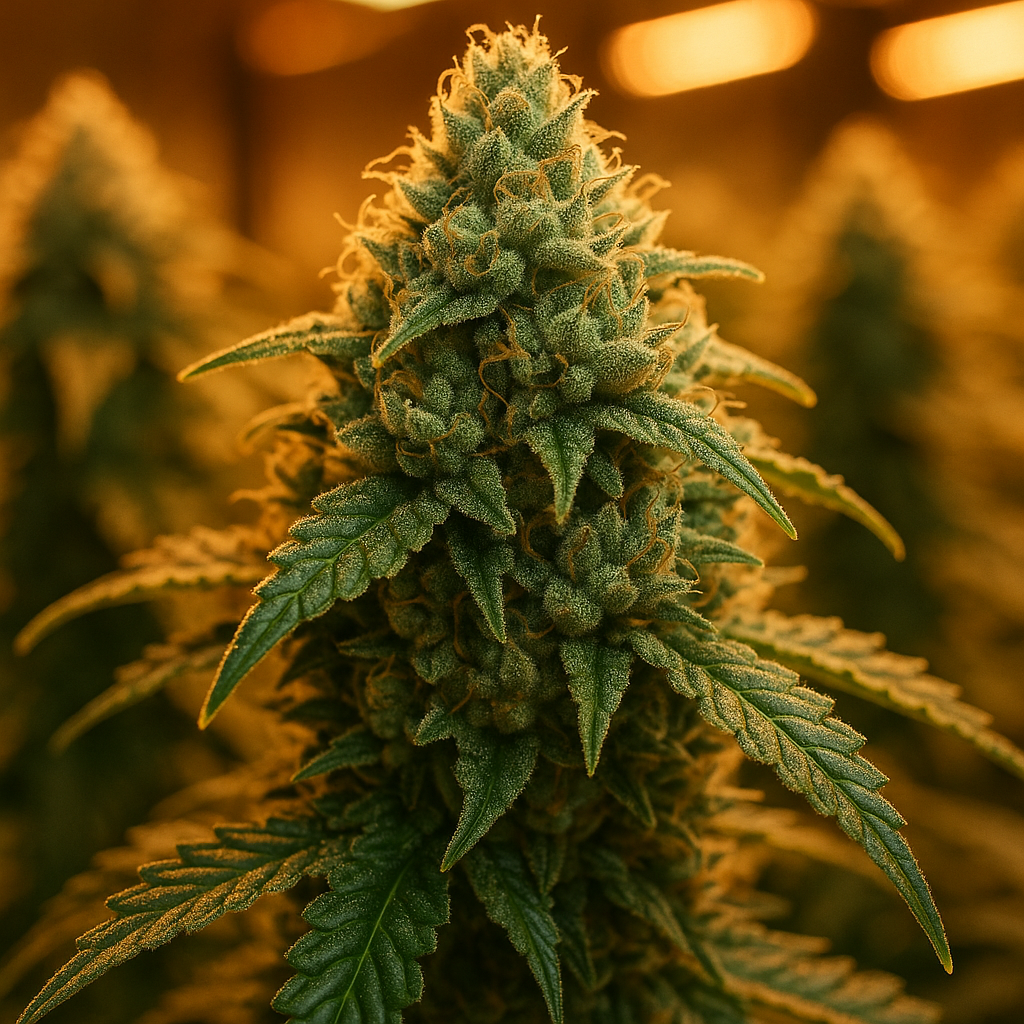
Flip to 12/12 once the canopy is within 15–20 cm of your SCROG net and most shoot tips are level with the mesh. Master Kush stretches roughly 30–50% above its pre-flip height during the first 2–3 weeks of flower, which is modest compared to most sativa-dominant hybrids and means you can flip later than you might think without losing headroom. In our runs, a plant sitting at 45 cm at flip typically finishes at 60–75 cm.
Resin production kicks in noticeably around week 4, and by week 6 the buds are dense, hard, and beginning to develop the fuel-and-hash terpene profile that defines this cross. The Humulene terpene profile tends to develop more slowly than Myrcene-dominant strains, so resist the urge to harvest early based on smell alone.
Bud sites swell significantly between weeks 7 and 9, this is when most of the final weight is added. We have measured up to 20% bud weight gain in the final 10 days before harvest on well-fed plants, so do not cut the nutrient program short prematurely. Begin flushing or transition to ripening formulas at week 8 for a week-9 cut, or week 9 for a week-10/11 cut on slower phenotypes.
- Flip trigger: canopy 15–20 cm below SCROG net
- Stretch: 30–50% above pre-flip height
- Light schedule: 12 hours on / 12 hours off
- PPFD at canopy: 800–1,000 µmol/m²/s (weeks 1–4); 900–1,100 µmol/m²/s (weeks 5–harvest)
- EC peak: 1.8–2.2 mS/cm (weeks 4–7)
- Flush start: week 8 (standard cut) or week 9 (slow phenotypes)
- Total flower time: 8–11 weeks
Environment
Master Kush is tolerant of minor environmental swings, but it performs best when temperature and humidity are held within tight ranges. In veg we keep daytime temperatures at 22–26°C with night temperatures no lower than 18°C, wider swings slow growth without triggering any beneficial stress response in this strain. Relative humidity during veg should sit between 55–65%.
Drop humidity progressively through flower: 45–55% in early flower (weeks 1–4), then 40–45% from week 5 onward, and 35–40% in the final 2 weeks before harvest. Master Kush produces very dense bud structures and that compression creates humid microclimates inside colas, keeping late-flower humidity below 45% is non-negotiable if you want to avoid botrytis. We have lost colas on this strain in humid rooms at week 8; it is not forgiving of wet conditions when bud density is at peak.
Outdoors, Master Kush finishes well in temperate climates with consistent daytime temperatures of 20–28°C. In our experience, outdoor plants in Southern European or Pacific Northwest conditions (dry summers, cool but not cold autumns) match or exceed indoor yields on a per-plant basis, though m² comparisons favor SOG indoor setups. Plants should be harvested before night temperatures drop consistently below 10°C to protect late-forming trichomes.
- Veg temp: 22–26°C (day) / 18–20°C (night)
- Flower temp: 20–25°C (day) / 17–19°C (night)
- Veg RH: 55–65%
- Early flower RH: 45–55%
- Late flower RH: 35–40%
- CO₂ (enriched rooms): 1,000–1,200 ppm
- VPD target flower: 1.2–1.6 kPa
Feeding Schedule
Master Kush is not a heavy feeder by indica standards, and overfeeding is one of the most common errors we see from growers who assume a high-yielding strain needs maximum nutrient input throughout. Start conservative and adjust based on leaf color, dark green, slightly waxy leaves during veg signal adequate nitrogen, while light green or yellow-green leaves indicate you should step up by 0.2 EC increments.
In coco or hydro we start seedlings at EC 0.8–1.0 mS/cm (approximately 560–700 PPM on the 700 scale), ramping to EC 1.2–1.6 during active veg. Transition to a bloom formula at flip, bringing phosphorus and potassium up while stepping nitrogen back to roughly 30–40% of its veg ratio. Peak EC during weeks 4–7 of flower lands at 1.8–2.2 mS/cm for most phenotypes in coco; hydro growers can run slightly lower at 1.6–2.0.
Soil growers can rely more heavily on amended mixes, but we still recommend a light liquid feed from week 3 of flower onward. A CalMag supplement at 2–3 ml/L is useful throughout the grow if you are using RO water or soft tap water, Master Kush responds well to adequate calcium, and deficiency shows first as interveinal chlorosis on lower fan leaves around weeks 3–4 of flower.
- Seedling (days 1–14): EC 0.8–1.0 mS/cm
- Early veg (weeks 2–3): EC 1.2–1.4 mS/cm
- Late veg (weeks 3–4): EC 1.4–1.6 mS/cm
- Early flower (weeks 1–3): EC 1.4–1.8 mS/cm
- Mid flower (weeks 4–7): EC 1.8–2.2 mS/cm
- Late flower / pre-flush (week 7–8): EC 1.4–1.6 mS/cm
- Flush (final 7–10 days): plain water or flush solution, EC <0.4
- pH target: 5.8–6.2 (coco/hydro); 6.2–6.8 (soil)
Training Methods
Master Kush's natural growth structure, short internodes, lateral branching tendency, and manageable final height, makes it well suited to SCROG, SOG, and low-stress training (LST). We have run all three approaches across multiple cycles and the yield numbers are closest between SCROG at 4 plants/m² and SOG at 16 plants/m², with SCROG producing slightly larger individual bud sites and SOG shaving 1–2 weeks off total cycle time by eliminating extended veg.
For SCROG, place a net at 30–35 cm above the growing medium and begin tucking shoots once they reach the mesh level. Master Kush will fill a 1 m² net from 4 plants in approximately 3.5–4 weeks of veg, assuming you have topped twice and are running a well-lit 600W HPS or equivalent LED at 600–700 µmol/m²/s during fill. Stop tucking once you flip to 12/12, the stretch will push remaining shoots through naturally.
High-stress techniques like lollipopping work well during the final week of veg: strip everything below the lowest SCROG net attachment point to redirect energy to the top canopy. In our experience, removing the bottom 30–40% of the plant's foliage at this stage results in measurably denser upper bud formation and reduces the risk of lower bud sites developing larfy, airy popcorn buds during flower.
Common Mistakes
Harvesting too early. The most consistently observed error across beginner grows we have reviewed is cutting Master Kush at week 8 based on breeder minimums. The 8-week figure represents absolute minimum maturity, most phenotypes we have grown hit peak trichome density and maximum yield between weeks 9 and 10. A week-8 harvest typically sacrifices 15–20% of final yield and leaves significant potency on the table.
Overfeeding during veg. Master Kush does not need EC above 1.6 at any point during vegetative growth. Growers who push EC to 2.0+ during veg in an attempt to accelerate growth consistently see tip burn, locked-out micronutrients, and slower overall development compared to plants run at conservative EC levels. Less is more in veg with this strain.
Poor airflow management in dense bud structures. By week 6 of flower, Master Kush colas are dense enough to trap moisture. Without targeted oscillating fans and adequate exhaust volume (aim for 1× room air volume exchanged per minute), humidity pockets form inside bud sites and botrytis establishes before it is visible on the outside. Check inside colas by gently separating the bud mass, grey fuzzy growth on interior stems at week 7 or 8 means your airflow is inadequate.
Skipping the flush. This strain's fuel and hash terpene profile is genuinely improved by a proper flush of 7–10 days. We have run side-by-side comparisons and the flushed plants consistently produce a cleaner, more pronounced diesel-and-pine finish in the final product. Flush with plain water (pH 6.0–6.2 in coco, 6.5–6.8 in soil) until runoff EC drops below 0.4 mS/cm.
Harvest Timing
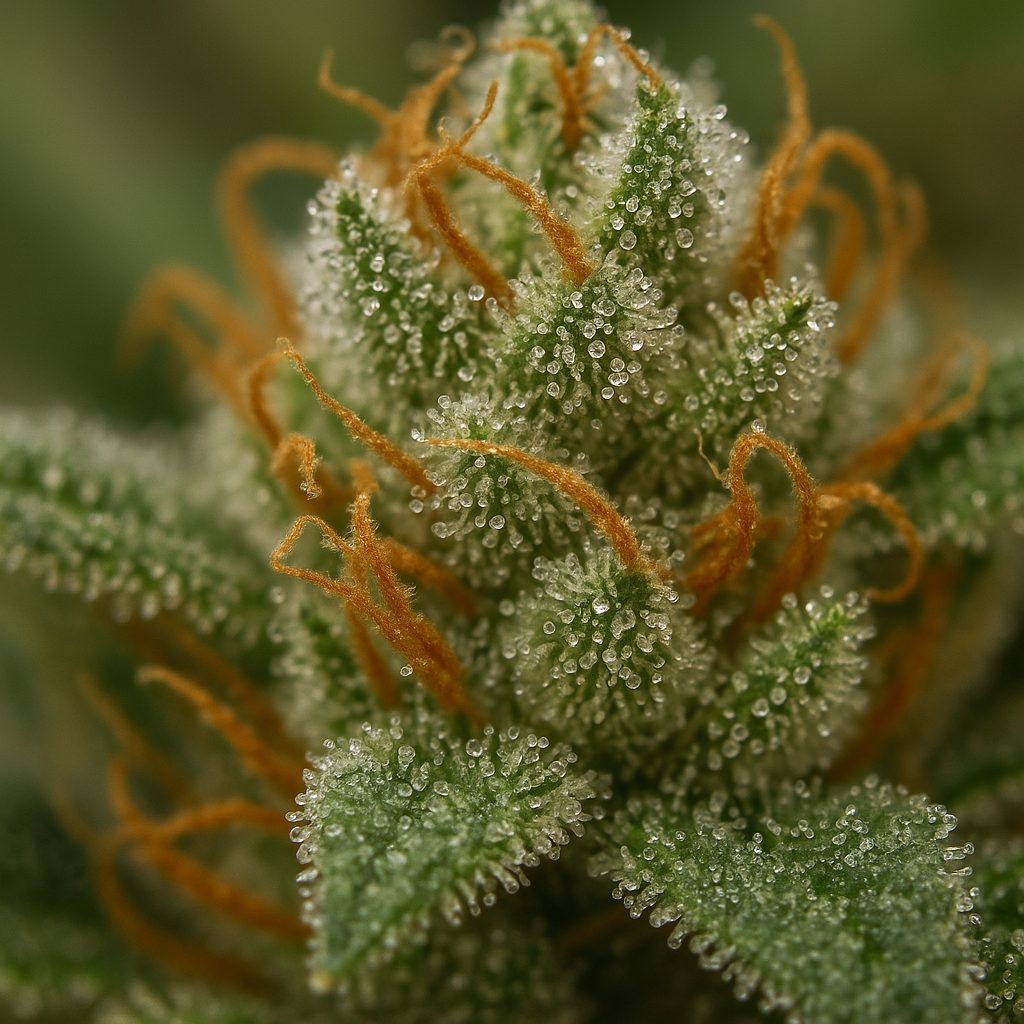
Trichome inspection with a 60–100× loupe or digital microscope is the only reliable harvest indicator for Master Kush. Pistil color is a rough guide but not definitive, we have seen plants with 70% orange pistils sitting at only 60–65% cloudy trichomes, which is not yet at peak maturity for this strain's THC expression.
For the mellow, sedated, tranquil effect profile this strain is bred for, target 10–20% amber trichomes with the remainder milky white and fully opaque. That amber percentage indicates THC has begun converting to CBN, which contributes to the heavy body and sedating quality. A harvest at 0–5% amber produces a more stimulating, anxious effect and leaves the full indica character underdeveloped.
Check trichomes on the upper-middle bud sites, not the calyx leaves, which amber faster than the actual flower. In our experience, once the upper-middle buds show 10% amber, you have a reliable 3–5 day window before the profile begins shifting further toward sedative dominance. Most growers targeting the described effect profile should cut within that window.
- Clear/translucent majority: too early, 7–14 days out
- All milky white: cerebral, uplifting, not typical of this strain's intended profile
- Milky white + 5–10% amber: balanced onset, body relaxation beginning
- Milky white + 10–20% amber: full indica expression, mellow, tranquil, sedated
- 20%+ amber: heavy sedation, couch-lock, sleep-aid territory
Ready to Run This Strain?
Master Kush Feminized Seeds
Hindu Kush × Skunk #1 genetics. 24–31% THC. 479–608 g/m² indoor. Beginner-friendly feminized seeds available now.
View Master Kush Feminized Seeds →How Master Kush Compares to Similar Indica Strains
Master Kush sits in a specific niche within the indica category: high THC ceiling, compact structure, moderate feeding requirements, and a pronounced terpene profile that leans toward fuel and hash rather than fruit or floral. The table below compares it against two other well-documented indica-dominant options to help you decide which fits your grow operation and target effect profile.
| Metric | Master Kush Fem | Indica Comparison A | High-THC Indica B |
|---|---|---|---|
| Genetics | Hindu Kush × Skunk #1 | OG Kush-lineage indica | Afghan-dominant indica |
| THC Range | 24–31% | 20–26% | 22–28% |
| Flower Time | 8–11 weeks | 9–10 weeks | 7–9 weeks |
| Indoor Yield | 479–608 g/m² | 400–500 g/m² | 450–550 g/m² |
| Difficulty | Beginner | Intermediate | Beginner–Intermediate |
| Primary Terpene | Humulene | Myrcene | Caryophyllene |
| Flavour Profile | Fuel, diesel, hash, pine | Earthy, citrus, wood | Spice, earth, floral |
| Best For | Sedation, sleep, SCROG | Relaxation, body relief | Fast cycle, SOG runs |
Master Kush's THC ceiling is its clearest differentiator, at 31% on tested phenos, it sits above most comparable indica cultivars. The Humulene-forward terpene structure also sets it apart from Myrcene-dominant indicas, producing a more earthy, diesel-forward nose that is distinct in the market. If you are looking for a beginner-accessible strain with high-THC genetics and a reliable yield floor above 479 g/m², the comparison is difficult to argue against.
Growers who prioritize speed above all else should consider a fast autoflower instead, Master Kush's 8–11 week window in photoperiod form is competitive but not the fastest option available. For those for whom effect quality and yield volume matter more than cycle speed, this strain consistently justifies the timeline.
Master Kush Feminized, Frequently Asked Questions
How long does Master Kush Feminized take to flower?
Master Kush Feminized flowers in 8–11 weeks from the flip to 12/12. In our experience, the majority of phenotypes reach optimal trichome maturity at weeks 9–10, and the 8-week minimum harvest point sacrifices yield and potency. Plan for a 9-week flower period and check trichomes from week 8 onward to determine your specific cut date.
What yield can I expect from Master Kush indoors?
Indoor yields under a properly set up SCROG or SOG with adequate light (minimum 600 µmol/m²/s average at canopy) run 479–608 g/m². The lower end of that range reflects conservative setups with 400–600W HPS-equivalent lighting; the upper end requires 800–1,000 µmol/m²/s PPFD during flower peak and dialed feeding at EC 1.8–2.2 during weeks 4–7.
Is Master Kush a good strain for beginners?
Yes, and it is one of the more genuinely beginner-accessible high-THC indicas we have grown. It tolerates minor pH swings (within 0.3–0.4 of target), recovers quickly from training stress, and does not require precision nutrient management during veg. The main beginner pitfall is harvesting too early, use a loupe and wait for 10–20% amber trichomes to hit the intended effect profile. For more guidance on starting out, see our seed selection guide.
What does Master Kush smell and taste like?
The flavor profile is fuel, diesel, hash, and pine, driven by the Humulene (primary), Caryophyllene (secondary), and Ocimene (tertiary) terpene combination. The fuel and diesel notes are most prominent on the exhale, while pine and hash sit underneath as a base note throughout. Smell during late flower is pronounced and requires adequate carbon filtration in any tent or room setup.
How tall does Master Kush grow indoors?
With 3–4 weeks of veg, Master Kush typically finishes at 60–90 cm indoors. Plants that are flipped earlier (at 35–45 cm) finish at the lower end of that range; plants allowed 5+ weeks of veg can push toward 100 cm. The stretch during the first 2–3 weeks of flower adds 30–50% to the pre-flip height, so calculate headroom accordingly. Grow tents with at least 150 cm of internal height have no issues with this strain.
Can I grow Master Kush Feminized outdoors?
Yes. Master Kush performs well outdoors in temperate climates with consistent daytime temperatures of 20–28°C and low autumn humidity. Outdoor harvest timing aligns with late September to mid-October in Northern Hemisphere growing locations. The dense bud structure makes late-season rain and humidity a risk, monitor closely and harvest promptly if extended wet weather arrives. Mold resistance is moderate, not high.
What training method works best for Master Kush?
SCROG at 4 plants/m² is our preferred method based on yield data across multiple runs, it maximizes canopy coverage and allows each bud site to develop fully under direct light. SOG at 16 plants/m² is a close second and saves 1–2 weeks of veg time per cycle. LST alone works for single-plant grows or tent growers who prefer not to top, though yield per m² will be lower than a topped and trained canopy. Avoid heavy defoliation during flower, removing more than 30% of fan leaves after week 3 of flower consistently reduces final yield on this strain.
What effects does Master Kush Feminized produce?
The effect profile is mellow, tranquil, happy, and sedated, consistent with its indica lineage and Humulene-dominant terpene expression. At 10–20% amber trichomes the body relaxation is pronounced and the mental state settles into calm without significant cognitive impairment early in the session. Beyond 20% amber the sedation deepens toward sleep-aid territory. THC at 24–31% means onset is relatively fast (5–15 minutes inhaled) and duration runs 2–3 hours for most users at moderate dosing.
Start Your Grow
Master Kush Feminized Seeds, Available Now at BudLabz
Hindu Kush × Skunk #1. 24–31% THC. 479–608 g/m² indoor. 8–11 week flower. Beginner-friendly feminized seeds.
Also available: all feminized seeds · beginner strains · indoor strains
Order Master Kush Feminized →My Expertise
Marcus has spent over a decade working with cannabis genetics, from landrace preservation to modern hybrid development. His deep understanding of terpene profiles, cannabinoid expression, and phenotype selection informs every strain guide and product review on BudLabz.
I specialize in 3 areas…
✦ Share this post