OG Kush Feminized Grow Guide: Everything You Need to Cultivate This Classic Indica
A complete, data-driven grow guide for OG Kush Feminized, covering veg and flower phases, EC ranges, PPFD targets, training methods, harvest timing, and common mistakes intermediate growers make with this Chemdawg x Hindu Kush cross.
OG Kush Feminized is a nitrogen-sensitive, heavy-yielding indica that rewards careful environmental control and structured training, get those two things right and you are looking at 409–518 g/m² under a dialed-in indoor setup.
This guide covers every phase from seedling to cure, with the specific numbers you need: EC targets, PPFD ranges, flip timing, humidity thresholds, and trichome maturity windows. We have grown this Chemdawg × Hindu Kush cross through enough cycles to know where most intermediate growers lose yield, and we have written this guide to help you avoid those pitfalls.
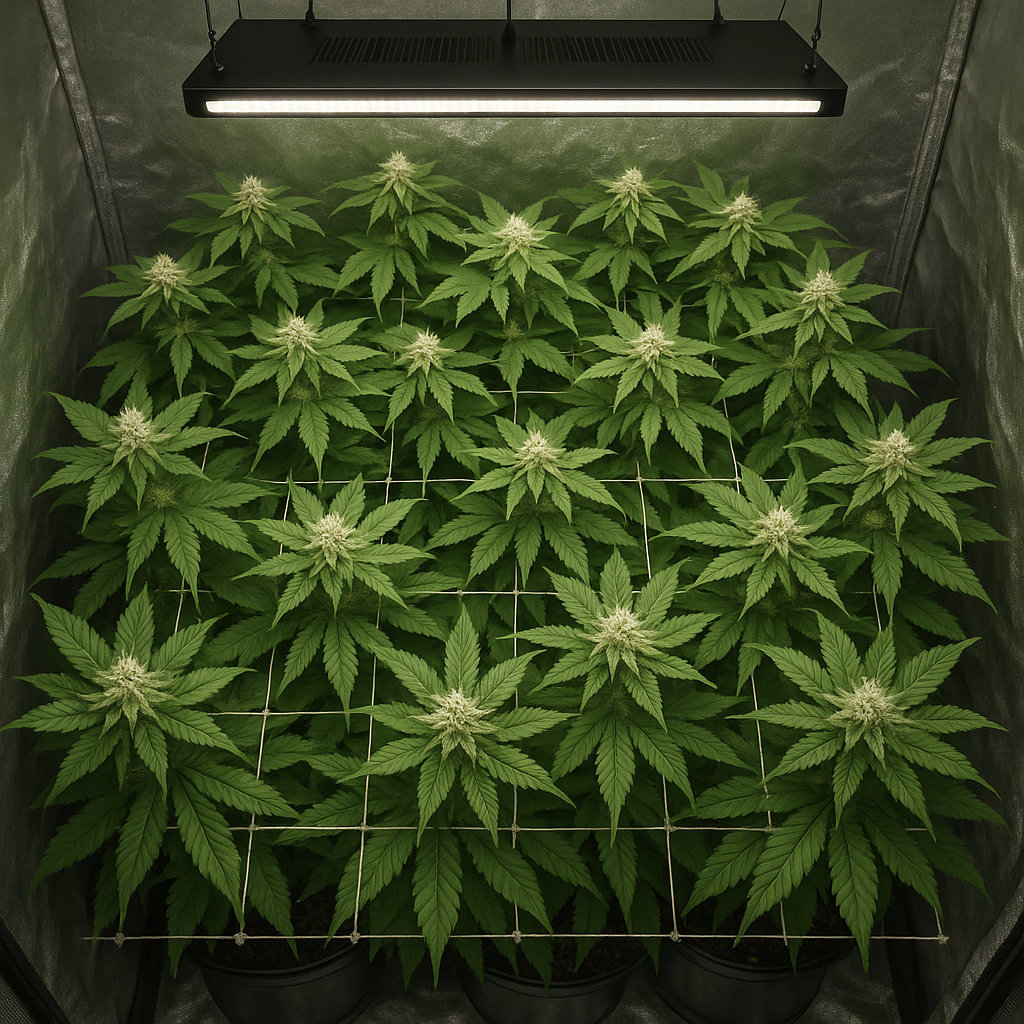
Vegetative Phase: Building the Structure Without Overfeeding
OG Kush germinates reliably and establishes quickly, but most growers hit their first problem in veg: they feed too aggressively. This strain is genuinely nitrogen-sensitive, and pushing nutrients beyond 800 ppm in vegetative growth will show up as leaf tip burn and dark, claw-shaped leaves within days.
Keep total dissolved solids under 800 ppm (EC 1.4–1.8) throughout veg and resist the urge to chase deep green color by adding more nitrogen. A medium green leaf with good turgor is exactly where you want to be.
We typically run an 18/6 light schedule and veg for 4–6 weeks from transplant into the final container. Letting the plant reach 40–50 cm before flipping gives the canopy enough nodes to work with during training without over-extending the grow cycle.
EC: 1.4–1.8 | PPM (500 scale): 700–900 | Max nitrogen: 800 ppm
Light schedule: 18/6 | PPFD: 400–600 µmol/m²/s
Temperature: 22–26°C | RH: 55–70%
Veg duration: 4–6 weeks from transplant
Root zone temperature matters here. OG Kush does not like cold roots, keep media above 18°C or you will see nutrient lockout symptoms that look like deficiencies but are actually uptake failures caused by root stress.
Begin LST (low-stress training) once the fourth or fifth node is established. Bend the main stem toward the container edge and tie it down, then work lateral branches outward over the following weeks. This opens the canopy and sets up an even surface for SCROG if you choose to go that route.
OG Kush responds well to both LST and SCROG. For SCROG, install the net at 25–30 cm canopy height and fill 60–70% of the screen before flipping to 12/12. Topping once at node 4–5 combined with LST produces the best canopy uniformity for this strain.
Avoid high-stress training like heavy defoliation or multiple toppings in rapid succession. OG Kush recovers from stress more slowly than some sativa-dominant varieties, and going too hard in late veg will delay the flip and cost you time.
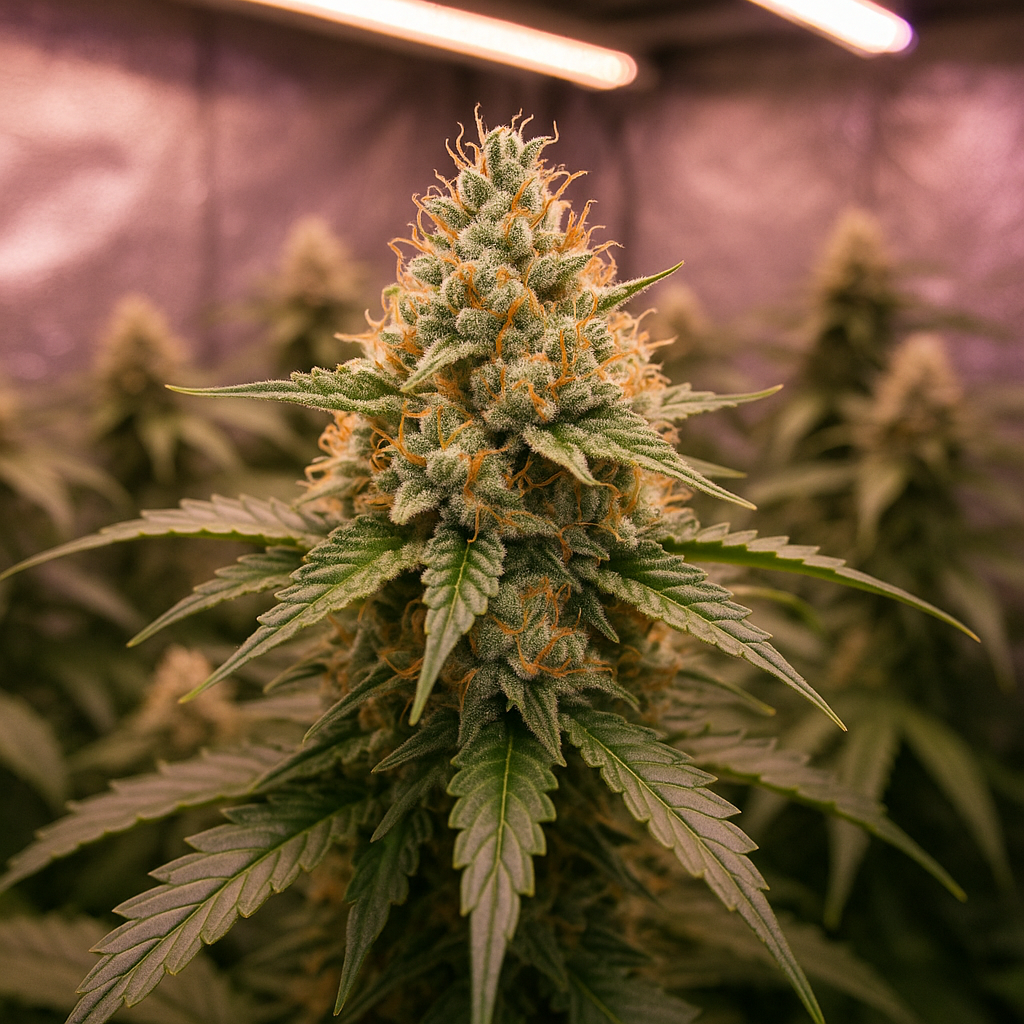
Flowering Phase: Managing the Stretch and Feeding the Bulk
When you flip to 12/12, expect a moderate stretch of 40–60% over the first 2–3 weeks. A plant sitting at 50 cm will finish somewhere between 70–80 cm in most cases, manageable in a standard 2-metre tent, but worth accounting for if you are running tight vertical clearance.
Transition feeding gradually. In weeks 1–2 of flower, maintain EC around 1.8–2.0 while the stretch is underway. By weeks 3–5, as bud sites begin stacking, move EC up to 2.0–2.4 and shift the nutrient profile toward phosphorus and potassium.
Week 5 is typically when OG Kush makes itself known to anyone in the building. The terpene profile, fuel, pine, and earthy citrus, becomes extremely pungent, and a carbon filter is not optional at this point. Size your filter correctly for your tent volume; an undersized unit will not scrub the air fast enough during peak bloom.
EC: 2.0–2.4 (peak weeks 4–7) | PPFD: 600–800 µmol/m²/s
Temperature: 20–24°C (lights on), 18–20°C (lights off)
RH: 40–50% (weeks 1–6), below 50% (weeks 7 through harvest)
Flower period: 8–11 weeks | Carbon filter: required by week 5
PPFD in the 600–800 µmol/m²/s range is the sweet spot for this strain during flower. Pushing above 900 without CO₂ supplementation does not translate to proportional yield gains and can cause light stress on exposed bud sites. Keep your light-to-canopy distance dialed for this range rather than chasing maximum intensity.
Begin a clean flush or reduce EC to 1.2–1.4 in the final 10–14 days. OG Kush finishes with noticeable leaf fade, yellowing of fan leaves is normal and expected as the plant draws down stored nutrients.
If you are growing OG Kush Feminized for the first time, the 8–11 week window is wide intentionally, phenotype variation is real in this strain, and some leaner phenos finish closer to 8 weeks while fuller, heavier expressions push toward 10–11.
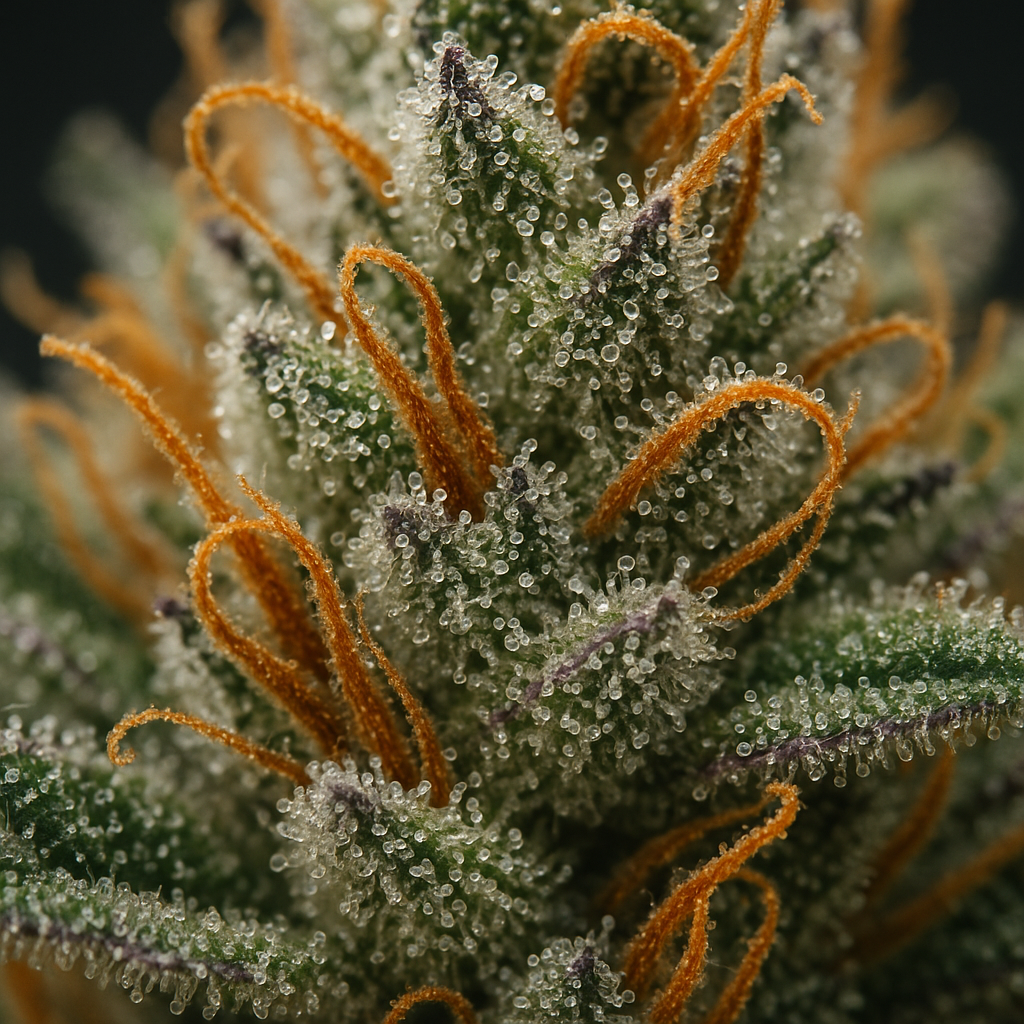
Environment: Humidity Control Is Non-Negotiable in Late Flower
OG Kush builds dense, resinous colas, and that structure is exactly why late-flower humidity management is critical. Tight bud architecture traps moisture, and botrytis (bud rot) can establish in the core of a cola before it is visible on the surface.
Keep relative humidity below 50% from week 7 onward, and ideally closer to 40–45% in the final two weeks. If your environment consistently runs high, prioritize dehumidification over everything else, a lost cola to mold is a bigger yield loss than any feeding error.
Air circulation within the canopy also matters. A gentle oscillating fan directed below the canopy, not directly at the buds, will reduce microclimates where moisture accumulates. Remove any large fan leaves that are blocking airflow between sites during weeks 5–6.
Temperature differential between lights-on and lights-off periods should stay within 5–8°C. Larger swings cause condensation in the canopy and create conditions that favor mold and powdery mildew. This is particularly relevant in cooler climates where night temperatures drop sharply.
Feeding Strategy: Precision Over Volume
OG Kush is not a heavy feeder by indica standards, but it responds well to a consistent, predictable nutrient schedule. Avoid the common mistake of ramping up EC too fast in early flower, this strain does not convert excess nutrients into yield, it converts them into toxicity symptoms.
In hydroponic systems, run EC at 1.4–1.6 in early veg, stepping up to 1.6–1.8 by late veg. Early flower runs 1.8–2.2, mid-flower peaks at 2.2–2.4, and late flower drops back to 1.4–1.8 before a final flush. In soil, those EC values are effective at the container runoff, not in the reservoir.
Cal-Mag supplementation is worthwhile, particularly under LED lighting where calcium and magnesium uptake can lag behind demand. We add 1–2 ml/L Cal-Mag throughout both veg and flower as a baseline insurance against interveinal chlorosis.
Water pH should be maintained at 6.0–6.5 for soil and 5.8–6.1 for hydro/coco. OG Kush phenotypes can show pH sensitivity, if you are seeing random deficiency patterns without a clear cause, check pH before adjusting nutrients.
Ready to run OG Kush?
We stock feminized OG Kush seeds selected for consistent THC expression and uniform germination rates. Every seed is backed by our germination guarantee.
View OG Kush Feminized Seeds →Training Methods: LST and SCROG Work Best Here
OG Kush has a naturally bushy, branching structure that makes it well-suited for horizontal training. The plant wants to grow multiple competing tops, and LST simply formalizes that tendency into a managed, even canopy.
For SCROG grows, install a 5 cm mesh net at roughly 25–30 cm above the growing medium. Tuck and weave branches through the screen as they grow, filling the net to 60–70% before flipping. Once you flip to 12/12, stop tucking and allow vertical growth, this is the stretch phase, and the structure you have built in the net will hold the canopy level as buds develop.
If you are running multiple plants rather than a single SCROG, LST combined with a single topping at node 4–5 produces four main colas per plant with minimal recovery time. Space plants at 50–60 cm centers in a 1.2 m × 1.2 m tent for efficient canopy coverage.
We do not recommend mainlining or manifolding for OG Kush unless you have a long veg window to spare. The recovery time between heavy training events is longer than with faster-recovering strains, and the yield advantage does not always justify the added weeks.
Common Mistakes and How to Avoid Them
Overfeeding nitrogen in veg. This is the single most consistent error we see with OG Kush grows. The plant looks like it wants more food, but the nitrogen sensitivity is real. Dark green leaves and clawing are early warning signs, dial back immediately and flush if symptoms are progressing.
Ignoring humidity in late flower. Growers who manage humidity well through weeks 1–6 sometimes relax their vigilance in the final stretch. Week 8 at 60% RH with dense, mature colas is a recipe for botrytis. Stay disciplined.
Harvesting too early. OG Kush at 30% amber trichomes produces a different experience than at 70–80% amber. Many growers pull early because the buds look ready visually, always use a jeweler's loupe or digital microscope to confirm trichome maturity before cutting.
Undersized extraction fans. The odor intensity from week 5 onward is significant. Running an undersized carbon filter in a 1.2 × 1.2 m tent is a common oversight, size up rather than down when selecting extraction equipment for this strain.
Pushing PPFD above 900 without CO₂. More light is not always better. Without CO₂ supplementation, pushing beyond 800 µmol/m²/s in flower produces diminishing returns and can cause bleaching on the tops of dense colas closest to the light source.
Harvest Timing: Trichome Maturity Over Calendar Days
The 8–11 week flowering window is a guideline, not a fixed end date. Trichome observation is the only reliable harvest timing method for OG Kush given the phenotype variation in this strain.
At peak potency, the majority of trichomes will be milky white (cloudy) with a proportion of amber heads. For the heavy body effect that OG Kush is known for, harvest at 70–80% amber trichomes on the sugar leaves and calyx heads. This is later than many growers expect, but it is where the profile this strain is grown for fully develops.
Harvesting at 20–30% amber produces a more cerebral, cleaner effect. Both windows are valid depending on the intended use, but the 70–80% amber target is what most experienced OG Kush growers are aiming for.
20–30% amber trichomes → uplifting, cerebral effect, THC peak
70–80% amber trichomes → heavy body effect, sedating, full OG profile
Check trichomes on calyx heads (not leaf surface) for accurate reading
Final flush: 10–14 days before target harvest date
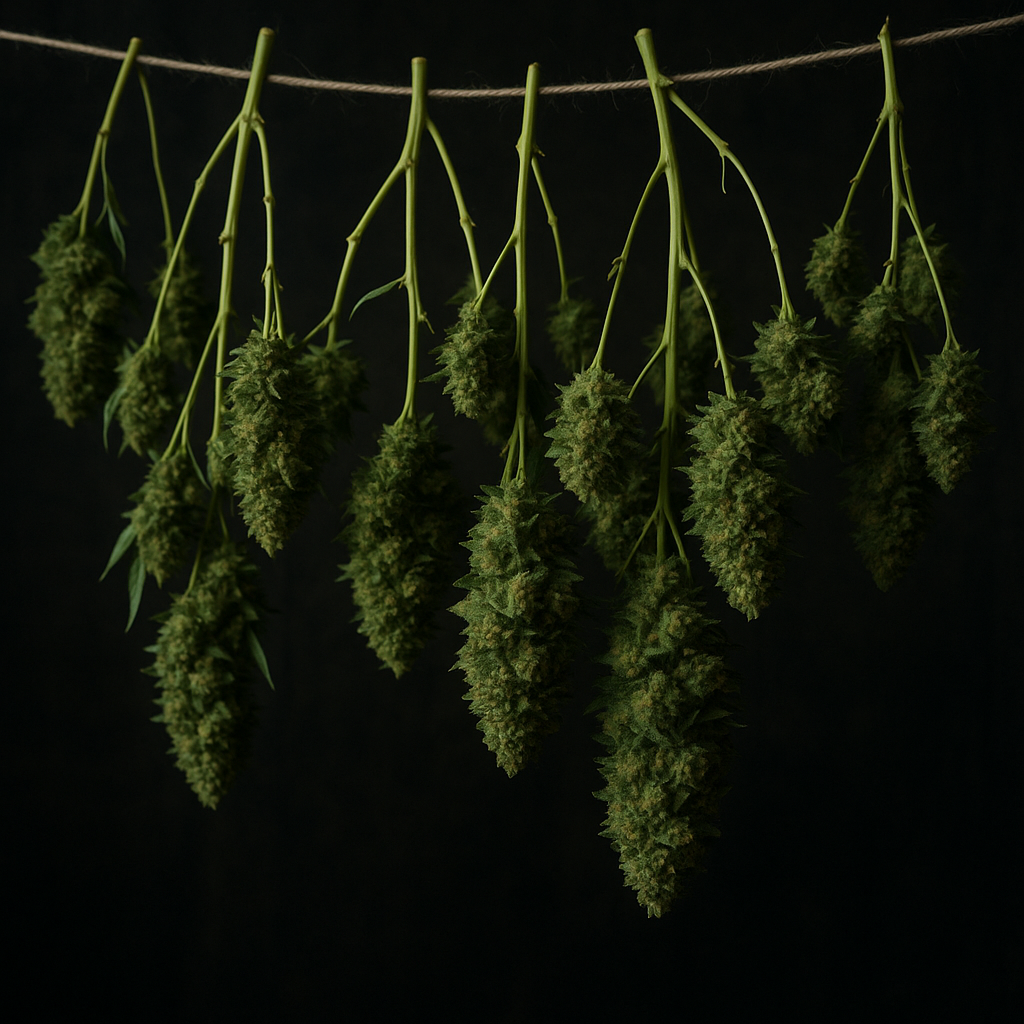
Dry in a dark room at 18–20°C with 50–55% RH for 10–14 days until small stems snap cleanly. Cure in sealed glass jars, burping daily for the first two weeks, then weekly for a further 4–6 weeks. OG Kush benefits noticeably from a proper cure, the terpene profile at 6–8 weeks of cure is substantially more developed than at harvest.
OG Kush vs Other Strains: Which Should You Grow?
Choosing the right strain for your setup and experience level matters. Here is how OG Kush stacks up against two commonly compared options.
| Characteristic | OG Kush Feminized | Critical Kush | Sour Diesel |
|---|---|---|---|
| Difficulty | Intermediate | Beginner | Intermediate–Advanced |
| THC Range | 24–31% | ~20–22% | ~20–26% |
| Stretch After Flip | 40–60% (moderate) | 30–50% (low–moderate) | 100–150% (heavy) |
| Feeding Sensitivity | High (N-sensitive) | Low–moderate | Moderate |
| Training Ease | Good (responds to LST/SCROG) | Good (compact structure) | Difficult (aggressive stretch) |
| Mold Risk | Moderate–high (dense buds) | Moderate | Low (airier buds) |
| Best For | Intermediate, indoor, SCROG | First-time indica growers | Experienced, tall grow spaces |
OG Kush vs Critical Kush: Critical Kush is the more forgiving choice for growers building their first indoor setup. It handles feeding errors better, produces a more compact plant, and finishes with slightly lower but still substantial THC levels. If you are newer to indica cultivation or want a lower-stakes first run, exploring indica strains like Critical Kush makes sense before committing to OG Kush. That said, the yield ceiling and potency ceiling of OG Kush are notably higher for growers who are ready to be precise.
OG Kush vs Sour Diesel: Sour Diesel is a sativa-dominant variety that stretches 100–150% after flip, more than double what OG Kush does. In a 2-metre tent, that stretch is a real constraint without careful management. Sour Diesel also requires considerably more training effort to keep the canopy level. OG Kush is the more manageable grow of the two. Growers interested in high-THC sativa options can browse high-THC strains, but for indoor efficiency and yield density, OG Kush has the advantage.
Final Assessment
OG Kush Feminized is a genuinely rewarding strain to grow once you understand its specific sensitivities. The nitrogen sensitivity in veg and the humidity requirements in late flower are the two factors that separate successful runs from disappointing ones, both are fully manageable with standard equipment and consistent monitoring.
At 409–518 g/m² with THC in the 24–31% range, the output justifies the intermediate-level care it requires. The moderate stretch makes it workable in most tent sizes, and the response to LST and SCROG gives you real control over canopy shape and yield distribution.
If you have a few grows under your belt and you are ready to work with a strain that has specific requirements but delivers specific results, OG Kush Feminized is a logical next step. It is not forgiving of neglect, but it rewards growers who pay attention to the numbers.
New to selecting seeds for your setup? Our guide on how to choose cannabis seeds covers the key factors to match strain genetics to your grow environment. For those building an indoor-specific lineup, our indoor seeds category includes strains selected specifically for tent and controlled-environment growing. If you are primarily interested in feminized seeds, OG Kush sits alongside other proven performers in that collection.
Frequently Asked Questions
How long does OG Kush Feminized take to flower?
OG Kush Feminized has a flowering window of 8–11 weeks from the date of light flip to 12/12. The range reflects genuine phenotype variation within this strain, leaner, faster-finishing phenos tend to complete closer to 8 weeks, while heavier-yielding expressions with denser bud structure often run 10–11 weeks. Always confirm harvest readiness using trichome observation rather than calendar counting alone.
What EC level should I run for OG Kush in veg?
Keep EC between 1.4 and 1.8 during vegetative growth, which corresponds to roughly 700–900 ppm on the 500 scale. OG Kush is notably nitrogen-sensitive, and exceeding 800 ppm nitrogen equivalent will typically produce toxicity symptoms, dark leaf color, clawing, and eventual tip burn. Err on the lower end if you are uncertain about your baseline water EC, and always account for minerals already present in your source water before adding nutrients.
What PPFD does OG Kush need during flowering?
The PPFD sweet spot for OG Kush during flower is 600–800 µmol/m²/s at the canopy. Pushing above 900 µmol/m²/s without CO₂ supplementation does not consistently translate into higher yield and can cause light stress on the uppermost bud sites. Use a PAR meter to confirm your actual PPFD at canopy level rather than relying on manufacturer distance charts, which are calculated for single-plant scenarios and not a filled SCROG.
How much does OG Kush stretch after flipping to 12/12?
Expect a moderate stretch of 40–60% over the first 2–3 weeks after the flip. A plant at 50 cm going into flower will typically finish at 70–80 cm, making this strain workable in standard 2-metre tents with LED or HPS lighting at appropriate hanging heights. If you are SCROG growing and have your net filled before flipping, the horizontal structure you have built will largely contain the vertical push without additional intervention.
When does OG Kush start smelling strongly?
Most growers notice the odor becoming significant around week 5 of flowering. The terpene profile, fuel, pine resin, and earthy citrus, builds rapidly from this point through the end of flower. A properly sized carbon filter with a matched inline fan is essential by week 5 at the latest. Do not wait until the smell is noticeable outside your grow space to install filtration, that means the filter is already undersized or the air exchange rate is too slow.
What humidity level is safe for OG Kush in late flower?
Relative humidity must stay below 50% from week 7 onward, with 40–45% being the target range in the final two weeks. OG Kush produces dense, tightly packed colas that trap moisture internally, making botrytis (bud rot) a realistic risk if humidity is not actively managed. Invest in a reliable digital hygrometer and a dehumidifier sized appropriately for your grow room volume. Canopy airflow from an oscillating fan positioned below bud level also reduces moisture accumulation between sites.
What trichome color should I harvest OG Kush at?
For the full body effect that OG Kush is grown for, harvest at 70–80% amber trichomes observed on the calyx heads (not the sugar leaves, which amber earlier). At this maturity level, THC degradation into CBN contributes to the sedating, heavy physical effect. Harvesting at 20–30% amber produces a cleaner, more cerebral experience with higher remaining THC concentration. Neither window is wrong, they produce different results for different purposes. Always observe trichomes under magnification of at least 60×.
Is OG Kush suitable for beginner growers?
OG Kush is rated intermediate difficulty due to its nitrogen sensitivity and late-flower humidity requirements. A grower who has completed one or two indoor cycles and understands the basics of pH management, EC monitoring, and environmental control should be well-positioned to run it successfully. Absolute beginners may find more margin for error with strains like Critical Kush, which is more forgiving of feeding variations. That said, following the specific numbers in this guide removes much of the guesswork that makes OG Kush feel difficult, it is precise, not complex.
What training method works best for OG Kush Feminized?
LST (low-stress training) and SCROG (screen of green) both work well with OG Kush's naturally branchy structure. A single topping at node 4–5 combined with LST to spread lateral branches is the most efficient approach for multi-plant setups. For a single-plant SCROG, fill 60–70% of the screen before flipping to 12/12 and allow vertical growth once the stretch begins. We do not recommend aggressive high-stress techniques like mainlining or multiple rapid toppings, as OG Kush has a longer recovery window than some faster-metabolizing varieties.
Start Your OG Kush Grow
Our feminized OG Kush seeds are available now with full germination guarantee. Every order includes strain-specific grow notes.
Shop OG Kush Feminized Seeds →My Expertise
Marcus has spent over a decade working with cannabis genetics, from landrace preservation to modern hybrid development. His deep understanding of terpene profiles, cannabinoid expression, and phenotype selection informs every strain guide and product review on BudLabz.
I specialize in 3 areas…
✦ Share this post